
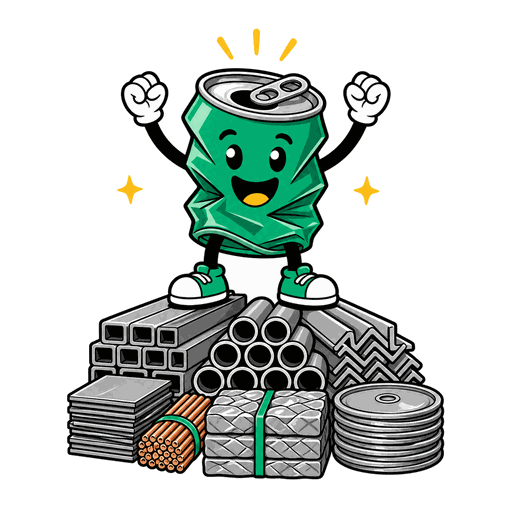
Scrap Metal Roll-Off Bins
In short: this profile models a $50k–$220kstartup-cost scenario, a 18% margin scenario, and $250k–$1.2M/yr small-bin fleet in possible revenue scale. These are editorial planning inputs—not surveyed benchmarks, typical results, quotes, or a forecast. Validate every figure against the local evidence gate below.
A dumpster, but with a better personality and worse edges.
Validate this business with local evidence
Do not invest from a directory estimate. Replace every scenario value on this page with evidence for the exact market, service boundary, buyer, and operating model you intend to use. A go decision needs written inputs and paid-demand evidence—not a promising category label.
Gate 1
Authority and insurance
Record licenses, permits, zoning, safety, environmental, vehicle, disposal, insurance, and specialist boundaries with the issuing source and renewal date.
Gate 2
Buyer evidence
Interview at least twenty plausible buyers. Record the current alternative, buying trigger, service frequency, unacceptable failure, budget process, and whether they will test a paid pilot.
Gate 3
Written startup quotes
Collect itemized supplier, vehicle, software, training, insurance, facility, and working-capital quotes. Separate one-time purchases from recurring commitments.
Gate 4
One-unit economics
Model collected price minus job-variable materials, fees, disposal, paid labor, travel, callbacks, acquisition cost, overhead, maintenance reserve, tax provision, and downtime.
Gate 5
Capacity and route
Calculate realistic billable units per day or week after setup, travel, loading, documentation, rework, sales, administration, seasonality, and cancellations.
Gate 6
Paid pilot and stop rule
Run the narrowest lawful paid offer. Define in advance the minimum demand, contribution, quality, safety, and repeat-purchase evidence required to continue.
Gag-worthy
Quietly wealthy
Editorial startup scenario
$50k–$220k
Editorial margin scenario
18%
Editorial revenue scenario
$250k–$1.2M/yr small-bin fleet
💩 Why it's ugly
It is bent metal, oily parts, sharp edges, and industrial yards where the coffee is strong for legal reasons. The product mostly looks like a tetanus mood board.
💰 Why customers may pay
Manufacturers, machine shops, HVAC contractors, plumbers, farms, and demolition crews generate metal scrap continuously. Operators earn through bin service, commodity spread, hauling fees, and better pricing from consolidated loads.
🗺️ The launch playbook
First 30 days
Map local scrap yards and specialty buyers for steel, copper, aluminum, stainless, brass, motors, and mixed industrial scrap. Confirm pricing method, contamination penalties, scale tickets, and payment timing. Buy or lease a hook-lift, roll-off trailer, or dump trailer setup, then acquire a few bins sized for small industrial accounts. Build a target list of machine shops, HVAC companies, plumbing shops, electrical contractors, farms, fabrication shops, and demolition crews.
Days 31-60
Offer the simplest pitch: we place the bin, you fill it, we swap it, you get paid or credited. For lower-value scrap, charge hauling. For clean nonferrous material, share value transparently. Label bins by material type so customers do not turn copper into mixed junk. Keep scale tickets and settlement statements clean.
Days 61-90
Add route discipline and bin utilization tracking. Idle bins are expensive lawn ornaments. Prioritize accounts with recurring volume and clean material. Negotiate better yard rates as consolidated tonnage rises. Add separate containers for high-value metals only after trust is established.
🧮 Scenario math to validate
Typical operators report charging haul fees of $100–$350 for low-value or distant pickups, while higher-value scrap may be handled through revenue share or commodity spread. Steel-heavy loads depend heavily on tonnage and local yard prices, while copper, aluminum, and stainless can materially improve economics. A small fleet of 5–15 bins can support strong revenue when utilization is high. Costs include truck payments, bins, fuel, insurance, repairs, yard fees, labor, and theft risk. Net margins often range around 12%–25%, improving with clean sorted material and short routes.
🧰 Tools & equipment
- Hook-lift truck, roll-off truck, or trailer setup: $35k–$180k
- Scrap bins or containers: $2k–$7k each
- Heavy chains, tarps, and straps: $300–$1,200
- PPE for sharp metal: $300–$1,000
- Magnet, bins, and sorting tools: $100–$800
- Scale access or portable floor scale: $500–$4,000
- Dispatch and settlement tracking: $30–$250/mo
🤝 Landing customer #1
Start with HVAC, plumbing, and fabrication shops because they understand scrap value and produce recurring material. Visit 40 shops with photos of bin sizes and a one-page settlement example. Ask what they do when scrap piles up and whether their current hauler provides clear scale tickets. Offer a trial bin for two weeks with no long agreement, then settle transparently after the first dump. Customer one will usually be a shop where valuable scrap is mixed with junk because nobody made sorting easy.
Could Scrap Metal Roll-Off Bins work for you?
Get a written report built around your location, budget and constraints. Choose three matched ideas or a launch plan for one business.
$100 USD once · 48 hours after complete intake and paymentStraight answers
How much does it cost to start a scrap metal roll-off bins business?+
This profile uses $50,000 to $220,000 as an editorial planning scenario, not a surveyed benchmark or quote. Replace it with written local equipment, licensing, insurance, facility, vehicle, software, training, and working-capital inputs before investing.
How profitable is scrap metal roll-off bins?+
The page models a 18% margin and $250k–$1.2M/yr small-bin fleet in possible revenue scale as editorial scenarios, not typical results or a forecast. Test collected price, variable costs, paid labor, travel, rework, acquisition cost, overhead, downtime, taxes, capacity, and repeat demand in a local paid pilot.
Why is scrap metal roll-off bins considered an "ugly" business?+
It is bent metal, oily parts, sharp edges, and industrial yards where the coffee is strong for legal reasons. The product mostly looks like a tetanus mood board.
Compare Scrap Metal Roll-Off Bins head-to-head
More from Recycling & Scrap
E-Waste Pickup & Data Destruction
Old laptops, dead printers, and the afterlife of bad procurement.
Wood Pallet Recycling & Resale
The glamorous world of rectangles that forklifts trust.
Construction Debris Material Recovery
Drywall dust, bent nails, and surprisingly formal invoices.