
The cleanest small business is often the one nobody wants to explain at dinner. The best solo opportunities are boring, regulated, necessary, and slightly disgusting.
This is not a list of cute side hustles. It is a field guide to ugly businesses where typical operators report modest startup costs, strong margins, and enough operational simplicity for one competent person to begin without building a miniature corporation on day one.
What Makes An Ugly Business Good For One Person
A good solo ugly business has five traits.
- Low startup cost: ideally under $25k, or at least possible to start lean before buying every shiny machine in the catalog.
- High gross margin: typical operators report margins around 30%-45% in many of these categories.
- Repeat demand: inspections, service routes, maintenance, compliance, or emergency work.
- Simple sales motion: property managers, restaurants, warehouses, clinics, contractors, and homeowners with urgent problems.
- Operational focus: one truck, one calendar, one phone, one person who actually shows up.
The great ugly business does not need a brand manifesto. It needs a license where required, insurance, a clear service area, clean paperwork, and the emotional stamina to answer calls nobody makes for fun.
The Best Starting Point: Boring Compliance
If you want the least theatrical version of ugly profit, start with compliance services. They are not viral. They are not beautiful. They exist because cities, insurers, health departments, lenders, and building owners prefer disasters to be prevented in writing.
Backflow Prevention Testing is close to the Platonic solo operator business. You verify that water does not reverse direction into places it should not, then submit the required paperwork. Typical operators report startup costs of $3.5k-$15k, margins around 45%, and revenue potential of $90k-$350k/yr for a solo-to-small-crew setup. The work is not glamorous. That is the point. Glamour is what happens when people underprice themselves.
Stormwater SWPPP Inspection is another compliance-heavy candidate. You inspect muddy construction sites so runoff has documentation. Typical operators report $4k-$22k startup costs, 45% margins, and $120k-$600k/yr revenue potential for solo-to-crew operators. It is paperwork plus fieldwork, which sounds dull until you realize dull paperwork can be recurring revenue wearing work boots.
Environmental Phase I Site Assessment sits higher on the expertise ladder. You review records, maps, and site history to help people avoid buying a property with a buried problem. Typical operators report $7k-$35k startup costs, 40% margins, and $150k-$700k/yr revenue potential for a specialist-to-small-firm path. This one favors people who can write clearly, research patiently, and resist the urge to say probably fine when the old map says dry cleaner.
These are strong solo candidates because the customer is not buying vibes. They are buying a report, a pass, a certificate, or a documented inspection. That makes selling cleaner. Not emotionally cleaner. Commercially cleaner.
Route Businesses: Small Stops, Repeated Forever
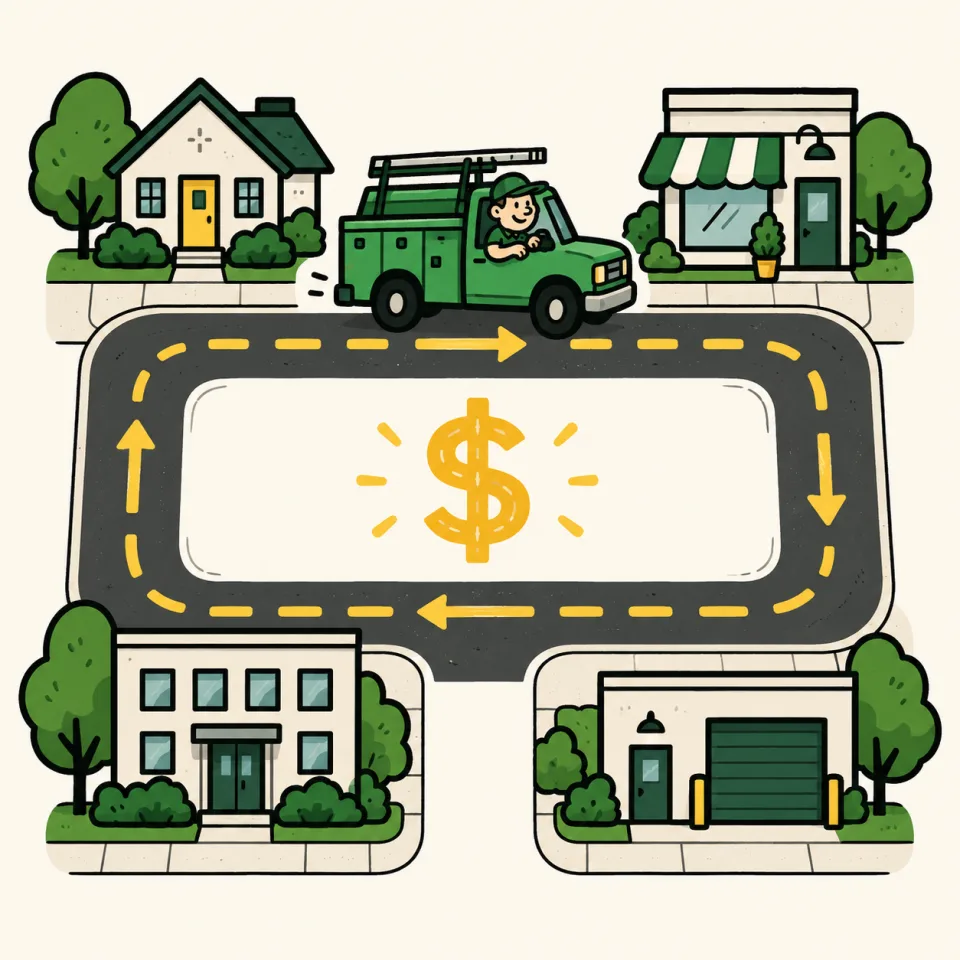
Route businesses can be excellent for solo operators because the work stacks geographically. The enemy is windshield time. The prize is recurring service.
Commercial Cockroach Control is ugly in exactly the profitable way. Restaurants, food facilities, and commercial properties need recurring control because one bad sighting can ruin brunch, reviews, and the manager's remaining optimism. Typical operators report $3.5k-$18k startup costs, 33% margins, and $150k-$700k/yr revenue potential for a route-based operator.
Commercial Ice Machine Sanitizing is more polite, but only slightly. Ice looks clean because it is cold, which is adorable. Typical operators report $6k-$25k startup costs, 30% margins, and $100k-$500k/yr revenue potential for a route-based business. The service is tangible, scheduled, and easy to understand. The customer either wants clean ice equipment or wants to discover biology in a bin. Most choose the invoice.
Commercial Hood Cleaning is harder, dirtier, and often nocturnal. It is still attractive because restaurants need grease removed before grease becomes a fire story. Typical operators report $6k-$25k startup costs, 30% margins, and $120k-$450k/yr revenue potential for a solo-to-small-crew model. A solo operator can start with smaller accounts, then add labor when the calendar becomes a greasy puzzle.
Medical Waste Pickup for Small Clinics is more regulated and more operationally serious. Tiny red bins, serious rules, lovely recurring invoices. Typical operators report $15k-$75k startup costs, 30% margins, and $180k-$800k/yr revenue potential for a regulated route business. This is not the cheapest starting point, but it has a clean customer profile: small clinics, dental offices, veterinary offices, and other facilities that prefer their compliance to leave on schedule.
Route businesses are not magic. They require density, reliability, and boring administrative hygiene. But when they work, they turn the solo operator's week into a repeatable machine. A dirty machine, but a machine.
Emergency Work: High Margin, Low Glamour, Bad Timing
Emergency ugly businesses can produce excellent invoices because the customer's problem is immediate. The tradeoff is obvious: the phone rings when normal businesses are closed, and the job site may be emotionally or physically unpleasant.
Sewer Ejector Pump Repair is a strong example. A basement pump full of bad news is rarely a shopping-around situation. Typical operators report $5k-$18k startup costs, 35% margins, and $150k-$550k/yr revenue potential for solo-to-crew operators. It is technical enough to support pricing, urgent enough to drive calls, and contained enough that a skilled solo operator can begin without becoming a full plumbing empire.
Sewage Backup Cleanup is more intense. When the house reverses its plumbing strategy, the customer wants competence, containment, and no poetry. Typical operators report startup costs of $18k-$70k, margins around 38%, and revenue potential of $200k-$850k/yr for restoration-focused crews. It can begin leaner than broad restoration, but it still demands proper PPE, disposal practices, insurance awareness, and a strong stomach.
Unattended Death Cleanup is not just ugly. It is sensitive. Typical operators report $12k-$45k startup costs, 35% margins, and $180k-$750k/yr revenue potential for a local owner-operator-to-crew path. The work requires discretion, training, biohazard procedures, and adult emotional wiring. The invoice may be good. The context is not.
Crime Scene Biohazard Cleanup is the most extreme version of this category. Typical operators report $25k-$85k startup costs, 40% margins, and $200k-$900k/yr revenue potential from owner-operator to crew. It is high-margin because the work is specialized, regulated, risky, and psychologically heavy. Do not enter this one because a spreadsheet looked exciting. Spreadsheets do not smell anything.
Emergency businesses are attractive, but they are not automatically good for every solo operator. If you need predictable hours, choose compliance or routes. If you can handle urgency, procedure, and unpleasant scenes without becoming sloppy, emergency work can pay unusually well.
Trade Niches With Commercial Buyers
The cleanest solo businesses often sell to commercial properties, not consumers. Businesses understand maintenance. They also understand that if the thing breaks, somebody important will ask why nobody handled it earlier.
Loading Dock Leveler Repair is a beautiful ugly niche: heavy, loud, ignored until it ruins Tuesday. Typical operators report $8k-$30k startup costs, 32% margins, and $180k-$750k/yr revenue potential for solo-to-crew operators. Warehouses and industrial sites do not want heroic branding. They want the dock working before trucks stack up and everyone starts pointing.
Commercial Door Hardware Repair is another underrated solo path. Doors are abused constantly, noticed only when broken, and essential to every commercial building pretending to function. Typical operators report $4k-$25k startup costs, 40% margins, and $100k-$450k/yr revenue potential for a solo-to-small-crew model. It is mundane, skill-based, and sellable to property managers who already have a list of doors quietly failing.
Warehouse Rack Inspection and Repair is more specialized, but the logic is simple: find forklift damage before gravity schedules a meeting. Typical operators report $5k-$30k startup costs, 35% margins, and $120k-$500k/yr revenue potential for a specialist crew. A solo operator may start with inspections and small repairs, then partner or hire for heavier work.
Fire Damper Inspection Service is compliance plus awkward access. You crawl above ceilings so insurance can sleep better. Typical operators report $10k-$45k startup costs, 30% margins, and $160k-$700k/yr revenue potential for solo-to-crew businesses. The work is not charming. It is recurring, documented, and often neglected. That is a business model wearing dust.
Commercial buyers are attractive because they are reachable in clusters. One property manager can lead to five buildings. One warehouse customer can create repair, inspection, and emergency work. One restaurant group can turn into a route. The solo operator should think less like a freelancer and more like a tiny maintenance department for problems nobody wants to own.
Outdoor And Property Services That Still Work Solo
Some ugly businesses are simple because the work is visible. The customer can see the before and after. This reduces explanation, which is nice because explanation is where many small businesses go to die.
Parking Lot Striping has that advantage. You paint straight lines so customers know where to abandon their cars. Typical operators report $4k-$22k startup costs, 40% margins, and $100k-$500k/yr revenue potential for a seasonal solo-to-crew model. It is equipment-light compared with many trades, but seasonality matters. In colder markets, the calendar has opinions.
Rodent Exclusion Services is also very solo-friendly. Seal tiny holes. Charge because tiny tenants forgot to sign the lease. Typical operators report $5k-$22k startup costs, 30% margins, and $150k-$650k/yr revenue potential for solo-to-small-crew operators. The real money is not just trapping. It is inspection, sealing, prevention, and explaining to homeowners that hope is not a building material.
Termite Inspection and Baiting is less disgusting but commercially excellent. Tiny insects quietly eating equity are a classic subscription product. Typical operators report $10k-$40k startup costs, 31% margins, and $200k-$900k/yr revenue potential for specialized local operators. This category rewards trust, documentation, and follow-up. The customer does not want drama. The termites have already handled that.
How To Choose Your Ugly Lane
Pick based on your temperament before you pick based on revenue potential.
If you want the simplest solo start, look at backflow testing, parking lot striping, commercial door hardware, rodent exclusion, and cockroach control. The startup costs are typically lower, the buyer is understandable, and the work can be scheduled without building a control room.
If you want stronger recurring revenue, look at route and compliance businesses: cockroach control, ice machine sanitizing, hood cleaning, stormwater inspections, fire damper inspections, medical waste pickup, and termite baiting. Recurrence is not passive income. It is active income with a calendar memory.
If you can handle emotional intensity and emergency timing, look at sewer ejector pump repair, sewage backup cleanup, unattended death cleanup, and crime scene biohazard cleanup. The margins can be strong, but the business will take a deposit from your nervous system.
If you prefer commercial buyers and mechanical work, loading dock repair, warehouse rack inspection, door hardware, and fire damper inspection are worth studying. They are less consumer-sensitive and often easier to sell through direct local outreach.
The Bottom Line
The best ugly business for a solo operator is not the one with the highest possible revenue range. It is the one you can sell, perform, document, and repeat without needing a staff meeting in month two.
For most people, the strongest starting shortlist is backflow prevention testing, rodent exclusion, commercial cockroach control, commercial door hardware repair, parking lot striping, and sewer ejector pump repair. Low-to-moderate startup cost. Healthy reported margins. Clear local demand. Minimal sparkle.
Perfect. Sparkle is expensive.