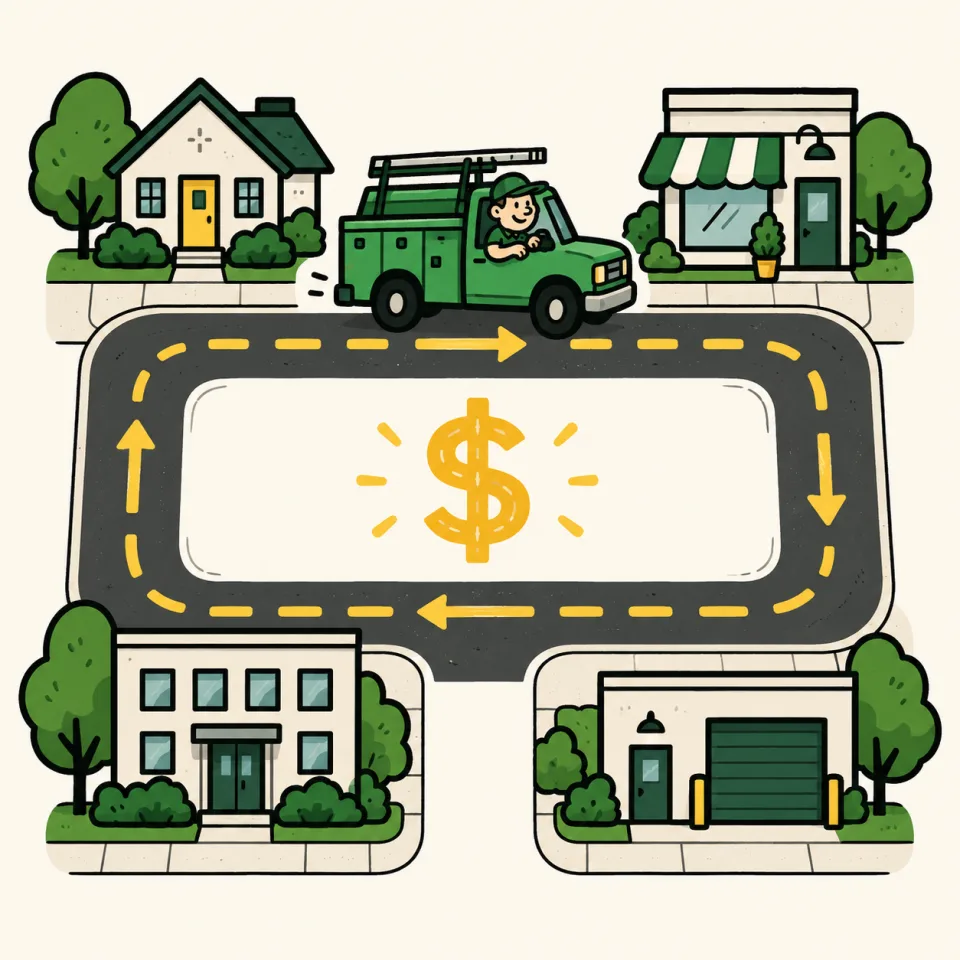

Buying a boring business feels elegant until you discover the elegance is named Gary and Gary has been manually renewing every customer in a spreadsheet since 2009. Starting from scratch feels cheaper until you spend six months learning that plumbers, property managers, and warehouse supervisors do not answer unknown numbers for spiritual reasons.
Both paths can work. The trick is knowing whether you are buying real cash flow, rented nostalgia, or a job with a truck.
The Core Difference
Starting from scratch buys you control. Buying an existing business buys you time, assuming the time is real.
A startup lets you choose the niche, pricing, software, route design, customer type, brand, and operating standards from day one. You avoid inheriting bad contracts, ancient equipment, mystery payroll, and a seller who says things like, we have always done it this way, while pointing at a fax machine.
An acquisition gives you customers, revenue history, employees, phone numbers that already ring, and routes that already exist. In boring businesses, that matters. A recurring stop on Tuesday morning is not glamorous. It is better than glamorous. It is billable.
The buyer question is simple:
- Can I create demand cheaper than I can buy it?
- Can I operate better than the seller without breaking what already works?
- Is this cash flow durable, or is it just the seller being locally famous?
If the answer is yes to the first question, start. If the answer is yes to the second and third, consider buying.
When Starting From Scratch Wins
Starting wins when the business has low entry cost, fragmented competitors, weak marketing, and customers who are already searching because something is broken, leaking, blocked, chewing, smoking, or legally required.
Rodent Exclusion Services is a good example. Typical operators report startup costs around $5k-$22k, margins near 30%, and revenue potential around $150k-$650k/yr for a solo-to-small-crew operator. You are not buying a factory. You are buying ladders, sealant, inspection discipline, local trust, and the ability to say no, that hole is not decorative.
Loading Dock Leveler Repair is another. Typical operators report $8k-$30k in startup costs, margins around 32%, and $180k-$750k/yr in revenue potential. Customers are warehouses. The need is urgent. The work is unromantic in a way accountants find soothing.
Commercial Kitchen Equipment Repair can also favor a startup path if you already have technical ability or can hire it. Typical operators report $8k-$45k to start, margins around 28%, and $180k-$700k/yr in revenue potential. When a fryer dies during lunch service, nobody forms a committee. They call whoever can fix the fryer.
Starting from scratch usually wins when:
- The customer problem is immediate and painful.
- Trust can be built with speed, competence, reviews, and referrals.
- Equipment needs are modest.
- The market is not locked up by long-term contracts.
- The owner can sell and deliver early jobs personally.
- Route density is not required on day one.
This is the world of service calls, inspections, exclusion work, emergency cleanup, and specialized repair. You can begin ugly and become profitable before anyone accuses you of having a brand strategy.
When Buying Wins
Buying wins when the business depends on route density, installed customer habits, contracts, location, permits, yards, facilities, or specialized infrastructure.
Industrial Uniform Rental and Laundry is not just laundry. It is recurring textile logistics with name patches. Typical operators report $30k-$180k in startup costs, margins around 21%, and revenue potential of $250k-$1.5M/yr for a route-based operation. Starting cold means signing accounts one by one, buying inventory, managing losses, replacing garments, and building routes slowly enough to question your life choices.
Construction Site Portable Toilet Service has the same gravity. Typical operators report $35k-$180k in startup costs, margins around 28%, and $200k-$1M/yr in revenue potential. But a fleet without route density is just plastic inventory waiting for regret. Buying an existing route can be worth more than buying the tanks.
Semi-Truck Parking Yard is even more location-driven. Typical operators report startup costs from $40k-$350k, margins around 50%, and revenue potential of $120k-$750k/yr for a small yard-to-regional lot. If a yard already has compliant access, lighting, fencing, demand, and monthly parkers, you are buying scarcity. Starting from scratch may mean discovering that zoning departments have hobbies, and one of them is saying no.
Mini-Warehouse Self Storage is the cleanest version of this. Typical operators report $200k-$2.5M in startup costs, margins around 55%, and revenue potential of $250k-$2M+/yr depending on size and market. Building new can work, but entitlement, construction, lease-up, financing, and market absorption are not minor errands. Buying stabilized occupancy can be rational, provided the occupancy is real and not held together by underpriced units and sentimental renters storing broken treadmills.
Buying usually wins when:
- Customers renew by habit.
- Geography matters.
- Route density drives margin.
- Permits or facilities are hard to replicate.
- The seller has under-managed pricing.
- The business has recurring accounts, not just episodic jobs.
- You can improve operations without needing to invent demand from zero.
A boring acquisition should feel like buying a small machine. Not a story. Not a dream. A machine.
The Route-Based Service Business: What You Are Really Valuing
A route-based business is not valued like a website, a restaurant concept, or a motivational quote with a payment processor.
You are valuing density, recurrence, retention, equipment condition, driver knowledge, and customer transferability.
The basic underwriting starts with adjusted owner earnings. Take seller profit, add back genuine owner-only expenses, subtract costs that will continue after closing, and normalize anything weird. Weird is common. Small business books are where personal trucks, cousin payroll, one-time repairs, and optimism go to mingle.
Then evaluate the route itself:
- Revenue per stop: Higher is better, unless it comes from one fragile whale account.
- Stops per mile: Dense routes protect margins. Scattered stops are a fuel company with invoices.
- Contract quality: Written agreements beat handshakes, even charming handshakes.
- Churn history: Lost accounts matter more than the seller's explanation of why those customers were difficult.
- Price age: If prices have not moved in years, there may be upside. Or customers may be trained to riot.
- Driver dependency: If one driver knows everything and nothing is documented, you are buying a person with a truck-shaped hostage note.
- Equipment condition: Old equipment is not automatically bad. Undocumented maintenance is.
For Industrial Uniform Rental and Laundry, you would examine contract terms, garment loss rates, replacement costs, route concentration, plant capacity, and whether account pricing actually reflects service complexity. A customer with many wearers, frequent swaps, and constant losses may look large while quietly eating margin.
For Construction Site Portable Toilet Service, you would inspect unit age, pump truck condition, disposal costs, route timing, seasonal swings, customer concentration among contractors, and whether recurring rentals convert into repeat relationships. The unit count matters. Utilized unit count matters more.
For Termite Inspection and Baiting, route value sits in recurring monitoring contracts and renewal behavior. Typical operators report $10k-$40k in startup costs, margins around 31%, and revenue potential around $200k-$900k/yr. A book of annual renewals can be valuable. A pile of one-time inspections is just memories with invoices.
How To Think About Price Without Getting Fancy
For small boring businesses, price is usually a negotiation around normalized earnings, asset value, growth quality, and risk. The cleaner the recurrence, the denser the route, and the more transferable the customer relationships, the more defensible the price.
Do not pay a premium for work the seller has not done yet.
A seller may say revenue could double with marketing. Great. Let them double it, then call you. You pay for current cash flow, durable assets, and visible operational upside you can execute.
A practical buyer model looks like this:
- Start with trailing revenue and adjusted owner earnings.
- Separate recurring revenue from one-time jobs.
- Identify the top customers and their percentage of sales.
- Normalize owner compensation, vehicle costs, rent, insurance, repairs, and bad debt.
- Rebuild gross margin using real labor, fuel, disposal, supplies, laundry, replacement inventory, or subcontractor costs.
- Deduct the salary of whoever must replace the seller.
- Add required capital spending in the first year.
- Stress-test revenue down and costs up.
If the deal only works in the seller's best year, it does not work. It is wearing a nice jacket.
Emergency Work: Startable, But Books Get Weird
Some ugly businesses have strong margins and urgent demand, but acquisitions require extra care because revenue can be lumpy, referral-driven, and tied to reputation.
Crime Scene Biohazard Cleanup has typical operator reports of $25k-$85k in startup costs, margins around 40%, and $200k-$900k/yr in owner-operator-to-crew revenue potential. Sewage Backup Cleanup shows typical startup costs of $18k-$70k, margins around 38%, and revenue potential of $200k-$850k/yr. Unattended Death Cleanup is similarly serious work, with typical operators reporting $12k-$45k to start, margins around 35%, and $180k-$750k/yr in revenue potential.
These can be excellent businesses. They are also not businesses you evaluate by glancing at revenue and nodding thoughtfully.
You need to know:
- How leads arrive.
- Whether referral sources will transfer.
- How often insurance pays and how fast.
- Whether compliance records are clean.
- Whether reviews are strong for the right reasons.
- Whether the seller personally answers every sensitive call.
If the brand is basically the owner's phone voice, be careful. You may be buying goodwill that leaves at closing in a pickup truck.
Red Flags In Seller Books
Seller books do not need to be perfect. Many good boring businesses have messy books because the owner was busy doing useful things, like fixing doors or removing unacceptable fluids from acceptable rooms.
Messy is forgivable. Misleading is not.
Watch for:
- Revenue with no deposits: Invoices are not money. Deposits are money.
- Cash sales that appear only during sale prep: Convenient cash is the dessert wine of bad diligence.
- Owner add-backs that are actually operating costs: A truck used daily is not a lifestyle expense because the owner once drove it to dinner.
- Unpaid family labor: Replace cousin labor with market wages.
- Missing payroll taxes or insurance: Cheap labor can become expensive archaeology.
- Aging receivables: Revenue trapped in receivables is not revenue. It is a polite hostage situation.
- Customer concentration: One account overpowers the whole business. One cancellation becomes a strategic event.
- No churn tracking: If nobody knows who left, nobody knows why growth stalled.
- Deferred maintenance: Low expenses may mean high future repairs.
- Inventory fantasy: Uniforms, parts, units, bait stations, and equipment should be counted, aged, and valued realistically.
- Personal goodwill: Customers call the seller, not the company.
- No route maps or service records: If the system lives in someone's head, you are buying a scavenger hunt.
For Cleanroom Wiper Laundering, this diligence gets even sharper. Typical operators report $75k-$250k in startup costs, margins around 30%, and $250k-$1.2M/yr revenue potential for a specialized facility. You are not just buying accounts. You are buying process integrity. Bad records in a compliance-sensitive laundry are not charming. They are expensive.
The Best Acquisition Target
The best boring business to buy is not the prettiest. It is the one with dull recurrence, fixable neglect, transferable customers, and underused pricing power.
Look for a business where:
- Demand already exists.
- The seller is tired, not deceptive.
- Customers stay for practical reasons.
- Prices are slightly stale.
- Operations are manual but understandable.
- Equipment is old but maintained.
- Employees are competent and under-supported.
- Marketing is weak, but reputation is decent.
That is the sweet spot. You are not trying to buy perfection. Perfect businesses are either not for sale or priced like someone discovered adjectives.
The Best Startup Target
The best boring business to start is one where customers already feel pain, setup costs are contained, and your early advantage can be speed, professionalism, and basic competence.
That favors niches like Rodent Exclusion Services, Commercial Kitchen Equipment Repair, Loading Dock Leveler Repair, and certain inspection or remediation services. You can win by answering the phone, showing up, documenting the work, charging clearly, and not behaving like a weather event.
Start when you can create the first $150k-$300k of revenue with sweat, sales, and tight geography. Buy when recreating the customer base would take years, permits, facilities, yards, fleet density, or trust you cannot manufacture quickly.
The Bottom Line
Starting from scratch is cheaper on paper and expensive in patience. Buying is faster on paper and expensive in diligence.
Start when the business rewards hustle, skill, and local execution. Buy when the asset is route density, recurring accounts, location, contracts, or infrastructure. Either way, boring does not mean easy. It means the customer has a problem, the solution is unglamorous, and the invoice has no need to be inspirational.